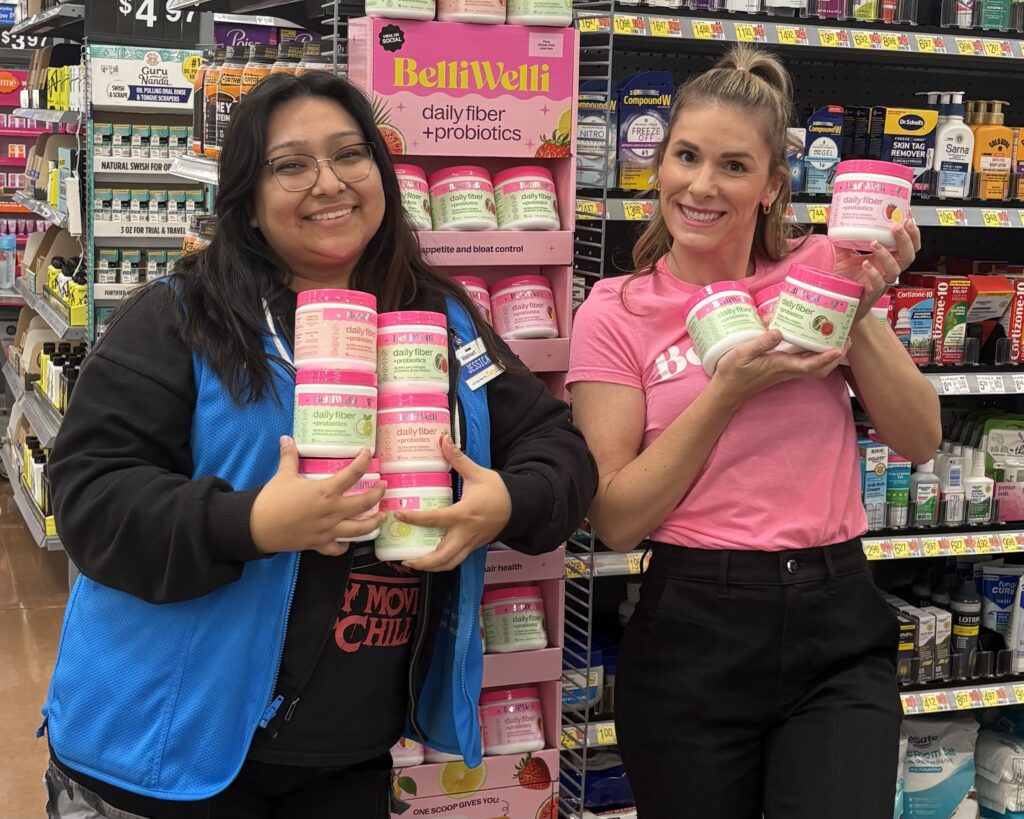
The Death of the Traditional Demo: Why Memorable Brand Experiences Matter
The Future of Traditional Product Demos Is Human Connection
Traditional Product Demos Have a Memory Problem
Traditional product demos are a lot like first dates. You meet briefly. Someone tries to make a good impression. There’s usually a small amount of food involved. And within a few moments, you’ve decided whether you’re interested enough to continue the relationship.
The problem? Most traditional product demos end exactly where most bad first dates do: you forget them almost immediately.
Think about the last time you accepted a sample at the grocery store. Maybe it was sparkling water. It could have been a protein bar. Or maybe you were handed a tiny cup of yogurt served with a suspiciously small spoon. You may have even liked it enough to throw it into your cart.
But do you remember the person who handed it to you? Do you remember what the company stood for? Could you tell a friend why that brand was different from the ten others sitting next to it on the shelf?
Probably not, and that’s because a sample isn’t an experience. Instead, it’s an introduction.
People Don’t Talk About Products. They Talk About Experiences.
The funny thing is, consumers haven’t stopped wanting to discover new products. If anything, we’ve become professional discoverers. We’ll stand in line for a pop-up, drive thirty minutes for a limited-edition coffee, and spend twenty minutes researching a restaurant before we decide where to eat dinner. Entire social media platforms are built around finding the next thing before everyone else does.
Consumers still love discovering something new. However, what we’ve lost patience for are forgettable interactions.
We’ve become incredibly selective with our attention. If a brand wants our time, we expect something in return. We want to learn something, feel something, laugh about something, or walk away with a story worth retelling.
After all, people rarely talk about products. Instead, they talk about experiences.
No one comes home and announces, “I had a tiny cup of yogurt today.” But they absolutely say things like, “I found this incredible brand and the founder’s story is amazing,” or, “You have to try this product. I met their team and they were wonderful.”
One is a transaction. By contract, the other is a memory, and memories are what build brands.
Human Connection Has Become a Premium.
This is why experiential marketing has evolved so dramatically over the past several years. The traditional product sampling model—set up a table, hand out samples, count units, and call it a day—still has value. Product trial remains one of the most powerful ways to introduce consumers to something new. However, product trial by itself is no longer enough because consumers are asking different questions:
Who made this?
Why does this exist?
Why should I care?
What makes this different?
And perhaps most importantly: How does this brand make me feel?
In fact, the most successful brand activations answer those questions almost effortlessly. They don’t simply distribute products; they create moments. Consumers leave feeling welcomed, understood, and connected. Those moments create opportunities for human interaction in a world that increasingly feels automated.
At the same time, think about how much of our day happens through screens. We order food without speaking to anyone. Self-checkout has become second nature. Texting has replaced many phone calls. We ask artificial intelligence to summarize meetings and draft emails. Convenience has become our default setting.
As a result, genuine interaction has become memorable.
A thoughtful conversation with a brand ambassador suddenly stands out. A founder sharing their story feels refreshing. An activation that feels personal becomes something worth talking about. And that’s where meaningful brand experiences begin.
The Sample was Never the Experience. It was the Invitation.
At their best, product sampling and experiential marketing aren’t about handing someone a snack-sized portion of a new product. They’re about creating consumer engagement that leads to trust, community, and long-term relationships. They’re about transforming a simple introduction into something people remember.
A sample becomes the beginning of a story. A conversation becomes the beginning of trust. An event becomes the beginning of community, and a customer interaction becomes the beginning of loyalty.
Perhaps that’s why traditional demos aren’t actually dying. They’re growing up.
The folding table isn’t disappearing. The samples aren’t going away. Consumers still enjoy trying something new, but the expectation surrounding those interactions has changed.
Consumers Want More Than Samples. They Want Something to Remember.
Today, consumers want memorable brand experiences. Consumers crave authenticity. They want to understand the people behind the products they buy, and they want experiences that feel human.
Perhaps that’s the real opportunity for brands: not to create more noise, not to distribute more samples, but to create more moments that make people stop, smile, and say, “Tell me more.”
Every Community Deserves a Different Experience.
At High Touch Marketing Group, we believe there is no one-size-fits-all formula for experiential marketing. Every customer is different. Communities have their own dynamics, needs, and expectations. Likewise, every brand has its own story, goals, and definition of success.
That’s why we don’t believe in pre-packaged activations or cookie-cutter experiences. The most effective experiential marketing strategies start by understanding people first.
Who are you trying to reach?
What do they value?
How do you want them to feel when they walk away from your brand?
The answers are different every time because perhaps the sample was never the experience to begin with. Perhaps it was simply the invitation. An invitation to start a conversation, create a memory, and build a relationship that lasts far beyond a tiny cup of yogurt and a suspiciously small spoon.